
What Hampshire County Tax Records Show
Hampshire tax records work on two linked sides. The Assessor card describes the parcel and its assessment. The Sheriff-Treasurer carries the bill and its payment status. Neither side answers every question alone. The card labels land value, assessment, the map/parcel number, taxing district, and property factors. The ticket, meanwhile, is keyed by its own ticket number.
| Field | What It Shows | Where |
|---|---|---|
| Land and building assessment | Assessor's values and assessment record | Hampshire Assessor / state assessment search |
| Current owner and mailing | Owner-of-record and notice address fields | Assessor card |
| Tax ticket | Balance, installment, and payment status | Sheriff-Treasurer by ticket number |
| Taxing district | Jurisdiction key connected to the parcel | Assessor card and ticket record |
| Delinquent land | Certified parcel and tax-sale notices | WV State Auditor County Collections |
Assessment is a tax figure, not a market appraisal. The county assessment card lays out separate owner, mailing, assessment, sales-history, and parcel labels. For amount due or payment status, the Sheriff-Treasurer ticket is the record to consult.
Hampshire Tax Tickets and the July Roll
County tax statements are mailed around July 15 to the name and address on the deed as of July 1 of the prior year, unless the Sheriff-Treasurer has a different name or destination. That timing can put the prior owner on a new purchaser's bill. It does not replace or undo the deed. The ticket is a payment record; the recorded instrument remains the ownership cross-check.
When a ticket bears an old name, match the ticket number and parcel description first. Then ask the tax office whether its mailing field has changed. If the deed was recently recorded, retain the book/page or instrument information and compare the next assessment release. The state says the Viewer refreshes annually, so it may not immediately reflect a transfer.
The Sheriff-Treasurer's tax page documents the ticket inquiry and payment route; the screenshot shows the official process.
To settle a current owner question, compare the latest deed with the Assessor card. The ticket's mailing name alone is not the answer.
Hampshire County Discount Dates
Hampshire rewards timely installment payment. The first half earns a 2.5% discount through September 1. The second half earns the same discount through the following March 1. The county page lists card payments at 2.5% with a $2 minimum. E-check costs $2. Returned checks cost $25. Those are payment-channel charges, not taxes on the assessed value. The county calendar marks October 1 and the following April 1 as delinquency dates. Each date starts the late clock on one half of the bill. A payment may post through a third-party channel. Run a ticket inquiry to confirm its status. Call the Treasurer if the record looks wrong. A bank authorization alone does not prove the payment. Use the county's tax inquiry and payment page for current ticket instructions. Confirm any fee before paying.
Finding a Hampshire County Tax Bill
The county's documented tax inquiry runs on a ticket number. The Assessor card helps identify the parcel. But the Treasurer's ticket is the record for a bill and its payment state. Keep the number from a paper statement or prior transaction. Then check the current ticket page. The county tax form publishes no public address or owner search.
- Find the ticket number on the county statement or ask the Sheriff-Treasurer to identify it.
- Open the county tax inquiry and enter the ticket number shown for the parcel.
- Read the amount and installment status in the ticket record.
- Use the Assessor card for parcel and value fields, not payment status.
- If the online ticket is unclear, contact the office with the ticket and parcel details.
- Assessment
- The Assessor's value record used in the property-tax system; it is not a sale appraisal.
- Tax ticket
- The Sheriff-Treasurer's record for a bill, installment, and payment status.
- Delinquency
- An unpaid installment after its listed due date.
- Certified-to-state land
- Unpaid real estate tax sent into the State Auditor process.
State Auditor Search for Hampshire Land
A parcel can move past the county ticket stage. The WV State Auditor's County Collections system then offers a separate certified-to-state search. Tax Year is required. Fields cover county, district, map, parcel, sub-parcel, certificate number, taxpayer, purchaser, bidder ID, description, ticket, account, and status. The page also links to notices to redeem, affidavits of exhaustion, pre-registration, and land-sale information. Choose the tax year first. Then use the most exact parcel field you have. A taxpayer or purchaser name alone may cover more than one tract. Chapter 11A of the West Virginia Code governs the delinquent-land process. Follow the Auditor's current notice. Follow the instructions from the office named there rather than an old sale calendar. The WV State Auditor search is the certified-land lookup. It displays the full set of fields and linked sale resources.
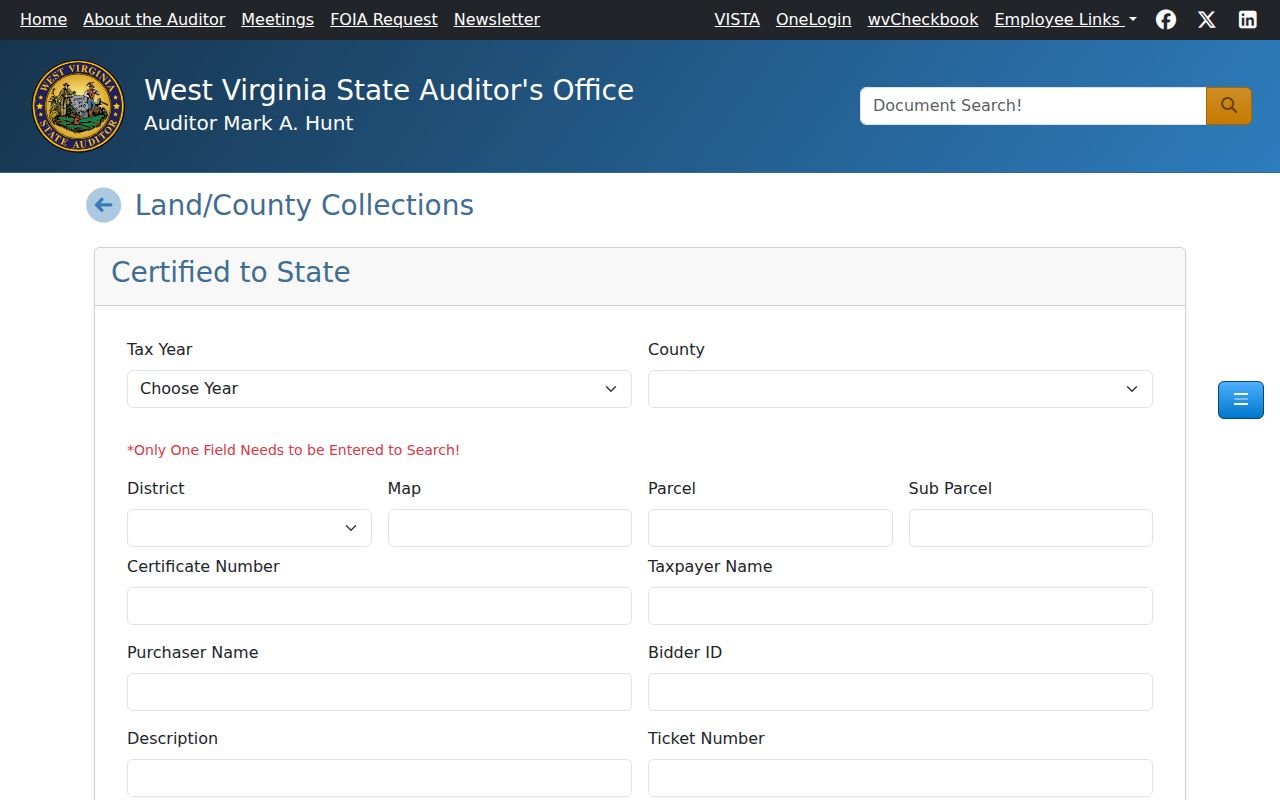
A county ticket and a certified-to-state record are different stages. Check both whenever the tax year is in dispute.
Hampshire County Delinquency Notices
Unpaid Hampshire County taxes may be published after April 30. Real-estate taxes still unpaid by October 31 of the following year get certified to the State Auditor. Interest runs at 9% a year from the delinquency date. Each ticket can carry its own status or a later payment, so check the parcel and tax year before acting on anything.
Treat a published delinquency notice as a lead, not a final statement. Match the district, map, parcel, and taxpayer against the assessment record first. Then confirm any redemption or payment with the Treasurer or the Auditor. The State Auditor's legal notices page holds the official notice index.
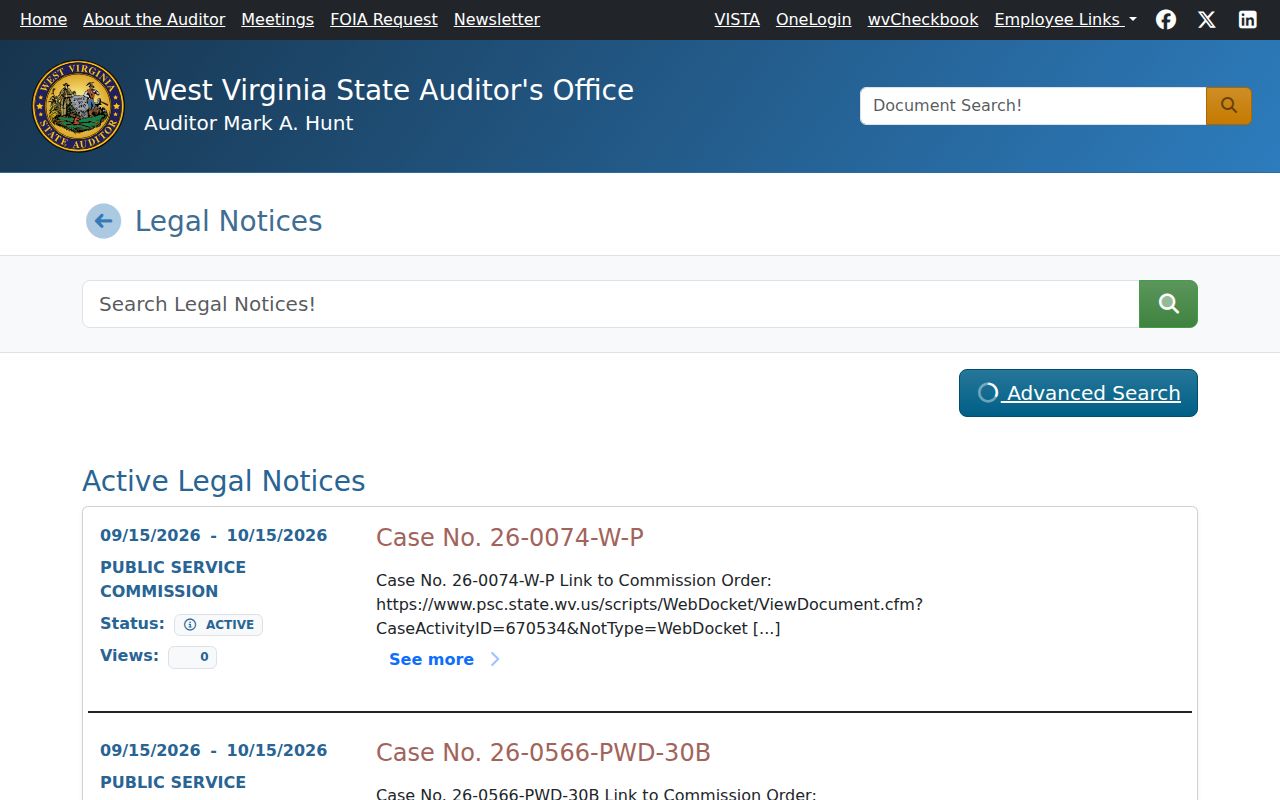
Note: Never send money through an unexpected notice link; verify payment directions with the county or the Auditor's office.
Hampshire Exemption and Levy Questions
The Hampshire Assessor publishes material on homestead, farm, timber, and personal-property exemptions, plus levy details. What those pages do not spell out is current eligibility rules, required proof, or deadlines. A program's label alone tells you nothing. Confirm with the Assessor which form fits your tract. Ask about the tax year before you file anything.
Keep your terms straight when reading a property record. Assessment value, exemption status, tax class, district, and bill amount are separate fields. One of them changing does not mean the bill was paid or a reassessment happened. The state form offers value ranges and land-use filters. The county card adds physical details like utilities and topography. For exemption and levy questions, the Hampshire Assessor's tax resources are the official starting point. The office can confirm current requirements.
Capon Bridge Tax Service
Capon Bridge residents have a local option. Hampshire's tax office runs a service substation at 195 Capon School Street, inside the old Capon Bridge Middle School, reachable at 304-856-3143. The substation handles tax service only. It is not a separate town assessor or recorder. Deeds and assessments stay in the Hampshire County records, and payments remain in the Sheriff-Treasurer system.
Ownership questions go to the County Clerk and Assessor. Bill questions go to the tax office, using the ticket number if the statement is missing or the mailing name is out of date. The main office is the Romney Sheriff-Treasurer at 66 North High Street. The Sheriff-Treasurer contact page lists both the county office and the Capon Bridge service point. Check the county page before visiting, since service availability can shift. This is a contact listing, not a land-record search.
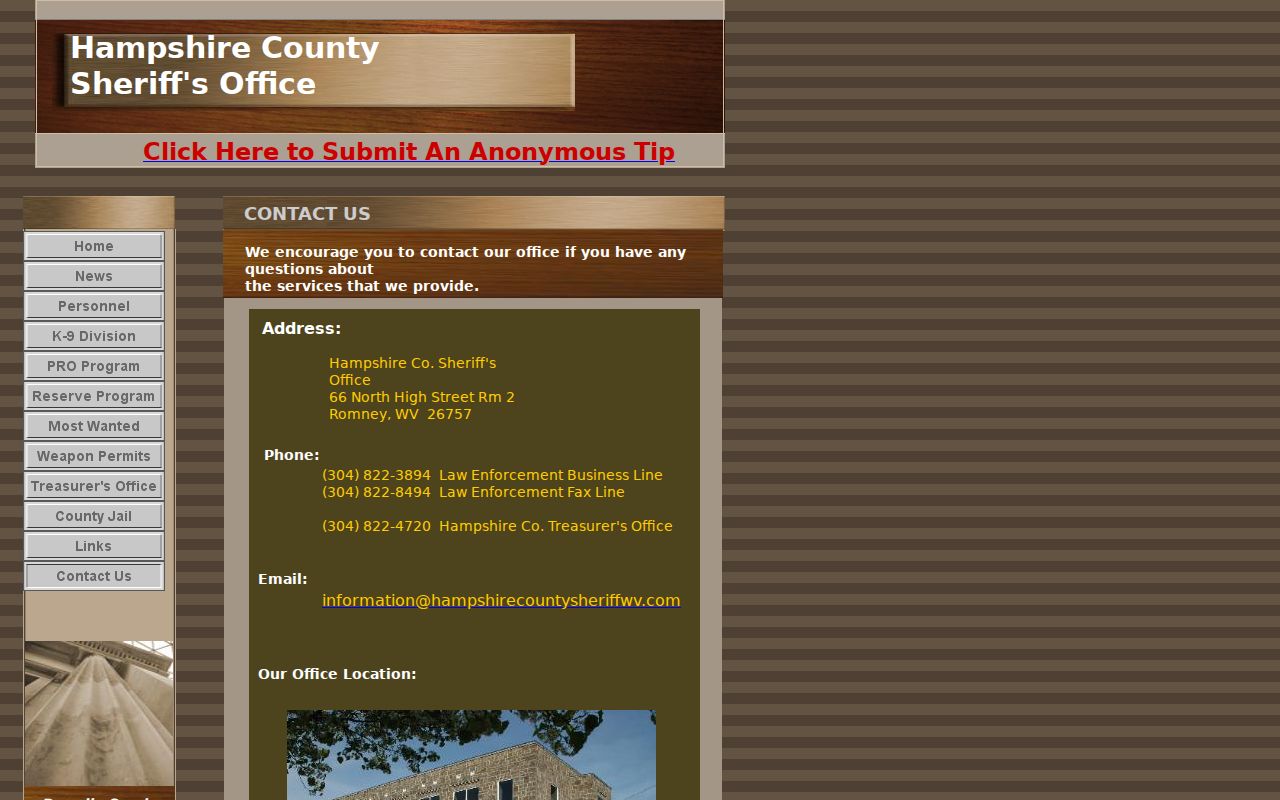
The substation's role stays narrow: it is a tax-services location, not the place to record a deed.
Correcting a Hampshire County Assessment
A Hampshire assessment card can carry errors. Wrong parcel number, wrong owner of record, or a bad situs are common. An off physical factor is another. All of these corrections start with the Assessor. Bring the parcel number and the card field in question. Also bring the deed or plat that backs your correction. A payment problem belongs to the Sheriff-Treasurer instead. Do not dress up a value complaint as a ticket inquiry. It will land in the wrong queue.
The Assessor's contact and program resources are published. Appeal-board dates, filing forms, deadlines, and evidence rules are not listed there. Ask the office for the current review calendar before relying on an old tax bill. Keep the response, plus any card or plat you submitted, filed with your parcel record.
Check the current calendar. No verified Hampshire appeal deadline was captured in the research. Contact the Assessor before filing and request the current review board, form, and date for the relevant assessment year.