
The Hampshire County Owner Record
Finding who owns a property in Hampshire County takes two county sources. Read them side by side. The Assessor lists the owner of record on every parcel card. The County Clerk's deed index shows the most recent recorded transfer for that same land. Each source refreshes on its own calendar. A just-closed sale can leave the annual tax roll a step behind. To search Hampshire County property records by address, match the parcel number on the card against the Clerk's index. Check the deed book and page against the latest instrument too. That cross-check gives a solid answer. A single source alone can mislead.
| CURRENT OWNER | Name shown on the assessment card |
|---|---|
| MAILING ADDRESS | Separate tax-notice destination |
| STREET ADDRESS | Physical situs field for the parcel |
| DEED BOOK/PAGE | Cross-reference to the recorded land instrument |
| MAP/PARCEL | Tax-map key used to confirm the tract |
| SALES HISTORY | Transfer entries displayed on the card |
An owner-of-record card cannot tell you who lives at a property. Nor is the mailing field an invitation to contact anyone. It serves one purpose: the tax record's destination. The stronger confirmation is a filed deed. A matching legal description confirms a recorded transfer.
Hampshire's CURRENT OWNER Label
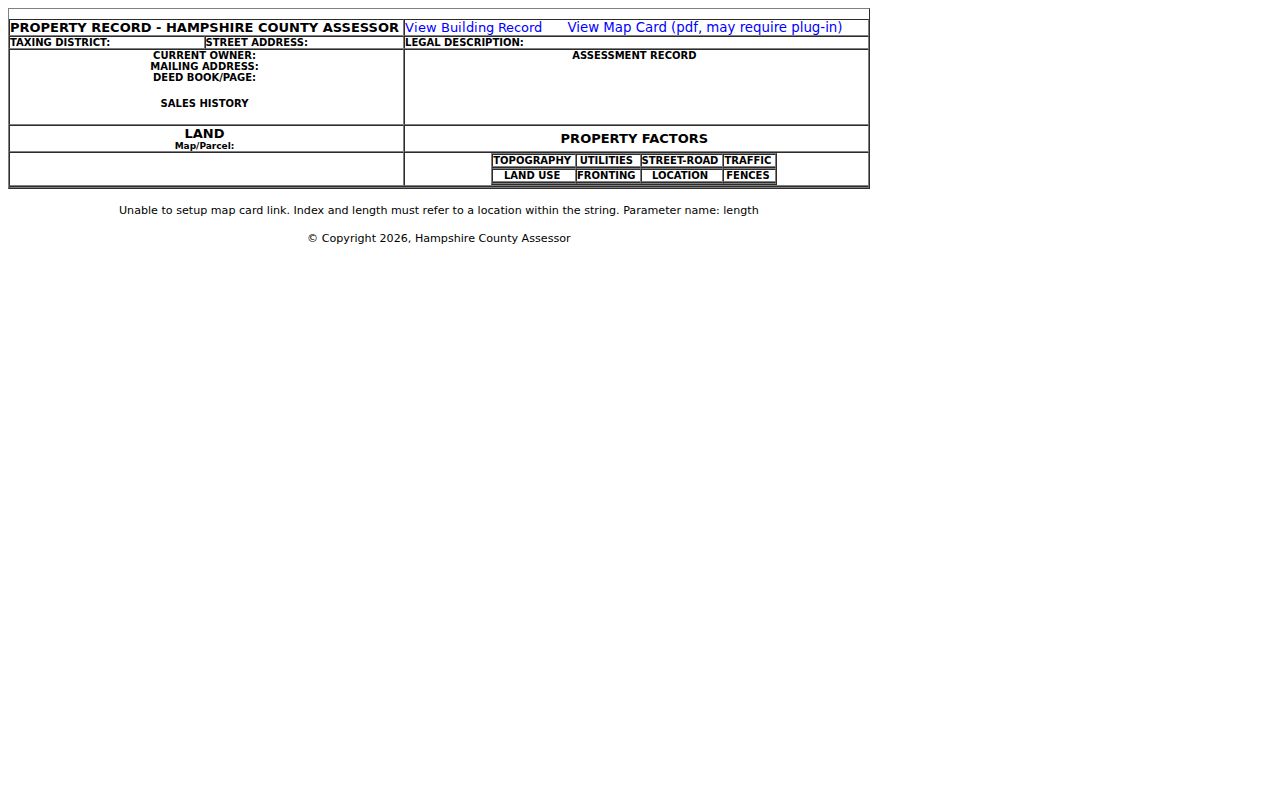
The labeled owner field matters because it splits the assessment record from loose map text. Alongside CURRENT OWNER, the Hampshire card lists TAXING DISTRICT, STREET ADDRESS, LEGAL DESCRIPTION, and MAILING ADDRESS. It also shows DEED BOOK/PAGE, SALES HISTORY, ASSESSMENT RECORD, LAND, and MAP/PARCEL. A familiar-looking name is not enough. Match the parcel ID. Match the deed reference before drawing any conclusion.
A public sample card shows the field labels without a populated Hampshire property. Confirming the value and date for one parcel takes a live card. The Hampshire Assessor card is the source for the full field inventory.
Treat book/page as a pointer to the filed deed.
Annual Hampshire Owner Update
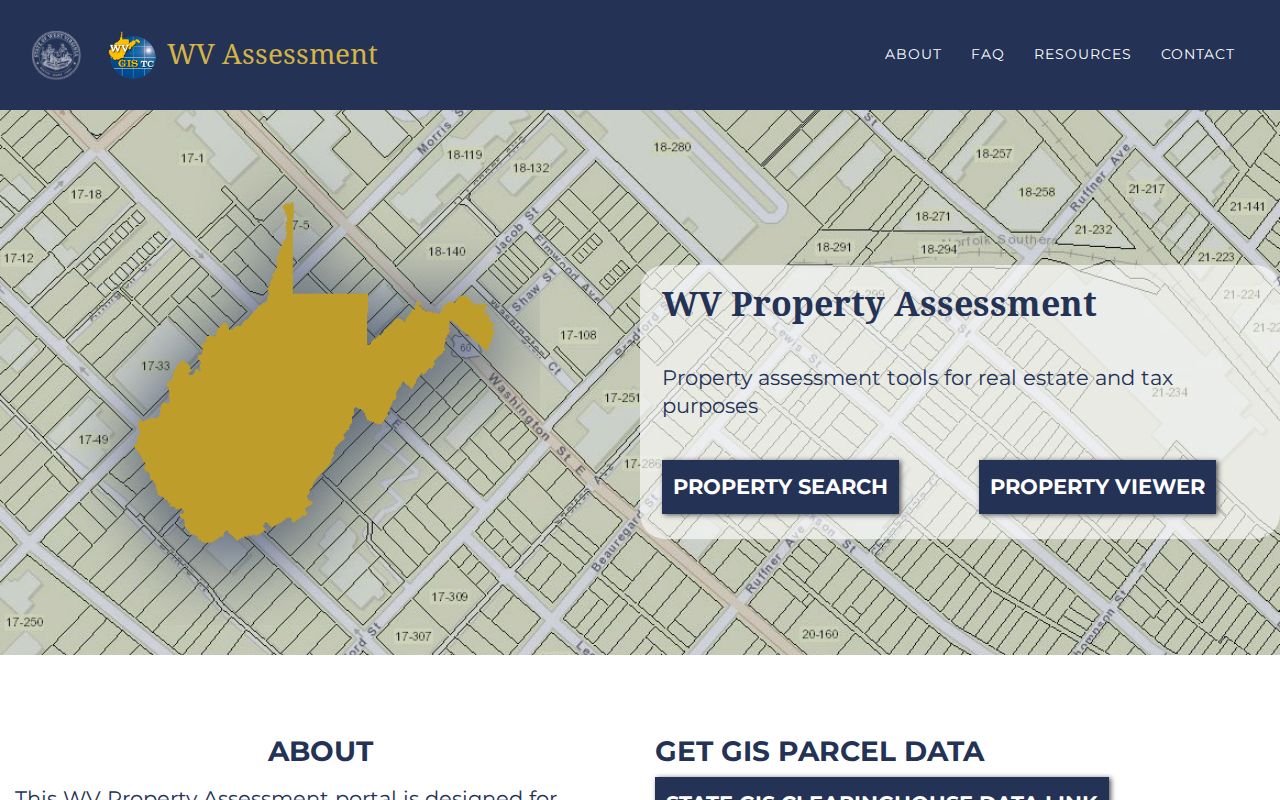
West Virginia updates the public assessment Viewer once a year. A simple ownership change may not reach the site right away. New parcel lines can trail the deed by even longer. For transfers in the July-to-June assessment period, assessors must deliver revised maps by February 1. A new line may still be missing after two years. The state advises contacting the Assessor in that case.
This lag lives in the public assessment layer only. It does not change the recording date of a Hampshire instrument. After a recent closing, the latest deed names who received the property. The tax roll catches up on its own schedule. The state Viewer guidance documents the annual update. It also shows why a current-owner check needs both the deed and the roll.
Note the date you checked both card and map.
Confirming Today's Hampshire Owner
A dependable current-owner check pairs one present assessment record with the latest recorded deed. Both should cover the same tract. The card is convenient but may lag. The deed identifies the grantee in the land record itself. When street names, parcel splits, or mailing labels clash, the deed's legal description settles it.
- Open the Hampshire card and capture CURRENT OWNER, MAP/PARCEL, and DEED BOOK/PAGE.
- Search the County Clerk index for the latest recorded conveyance.
- Compare grantee and legal description with the same assessment parcel.
- If the deed names an LLC, check its exact state business name without substituting the agent for the grantee.
- Ask the Assessor to correct a tax-card field if the recorded transfer is not reflected.
- Owner of record
- The person or entity the assessment record names.
- Assessment roll
- The Assessor's parcel and value record, updated on its own schedule.
- Situs / mailing
- The property's physical address versus a separate tax-notice address.
- Recording lag
- The period before a recent deed appears in a public assessment release.
Mailing Is Not Hampshire Situs
An Assessor card lists two addresses, and each serves a different purpose. MAILING ADDRESS shows where a tax notice goes. STREET ADDRESS marks the parcel's physical spot. The LEGAL DESCRIPTION, in turn, defines the land in record terms. A Hampshire County owner of record can have tax mail sent to a PO box or a route address. Some owners even use an out-of-county location. None of that proves anyone lives on the parcel itself.
Statements go out around July 15. The deed name and address used come from July 1 of the prior year. The tax office may have a different destination on file. Some parcels change hands recently. The ticket can still carry the earlier owner's name. The deed transfer sits in the Clerk index. The tax record is held by the Sheriff-Treasurer. Together they will settle the question.
Parcel ID Confirms a Hampshire Match
Confirming that a deed and a card describe the same land takes the full state parcel identifier. West Virginia defines six parts: county code, district, map, parcel prefix, suffix, and special ID. Hampshire's own county code should be copied from a live result. The state's published example comes from another county. Abbreviated forms drop parts, so preserve the entire displayed key.
Then compare district, map/parcel, and legal description. A newly split parcel may be absent from the Viewer. Its deed may already be recorded. The map orients the search. It cannot prove the legal line or title.
When Hampshire Records Disagree
When the CURRENT OWNER field disagrees with the grantee on a recent deed, pause before assuming an error. Compare dates. The statewide layer updates annually. The card, Clerk index, tax ticket, and GIS geometry may refresh at different times. Each one runs on its own clock. Keep the recording date, book/page, parcel ID, and legal description in one place.
Ask the Clerk about a missing index entry or image. Ask the Assessor about a roll correction. The Sheriff-Treasurer handles ticket status, not owner vesting. For tracing earlier transfers, the Hampshire former-owner chain is the route. This page stays with the present record.
Limits of Hampshire Owner Records
The owner of record listed in Hampshire County property records reflects the name on the recorded deed. It does not show who lives there or guarantee clear title. Ownership can sit with an LLC, a trust, or an estate. A fresh transfer may take time to show in the annual parcel viewer. A recent deed could post before the owner field catches up. West Virginia's public-records law carves out exemptions, and protected address programs shield eligible participants. Confirm any instrument with the recorder or assessor before you rely on it. Use only what your property research truly needs.
Lawful use. A Hampshire owner lookup supports property research and title review. Do not use owner information to stalk, threaten, or harass anyone, and do not infer that the mailing address is a residence.